
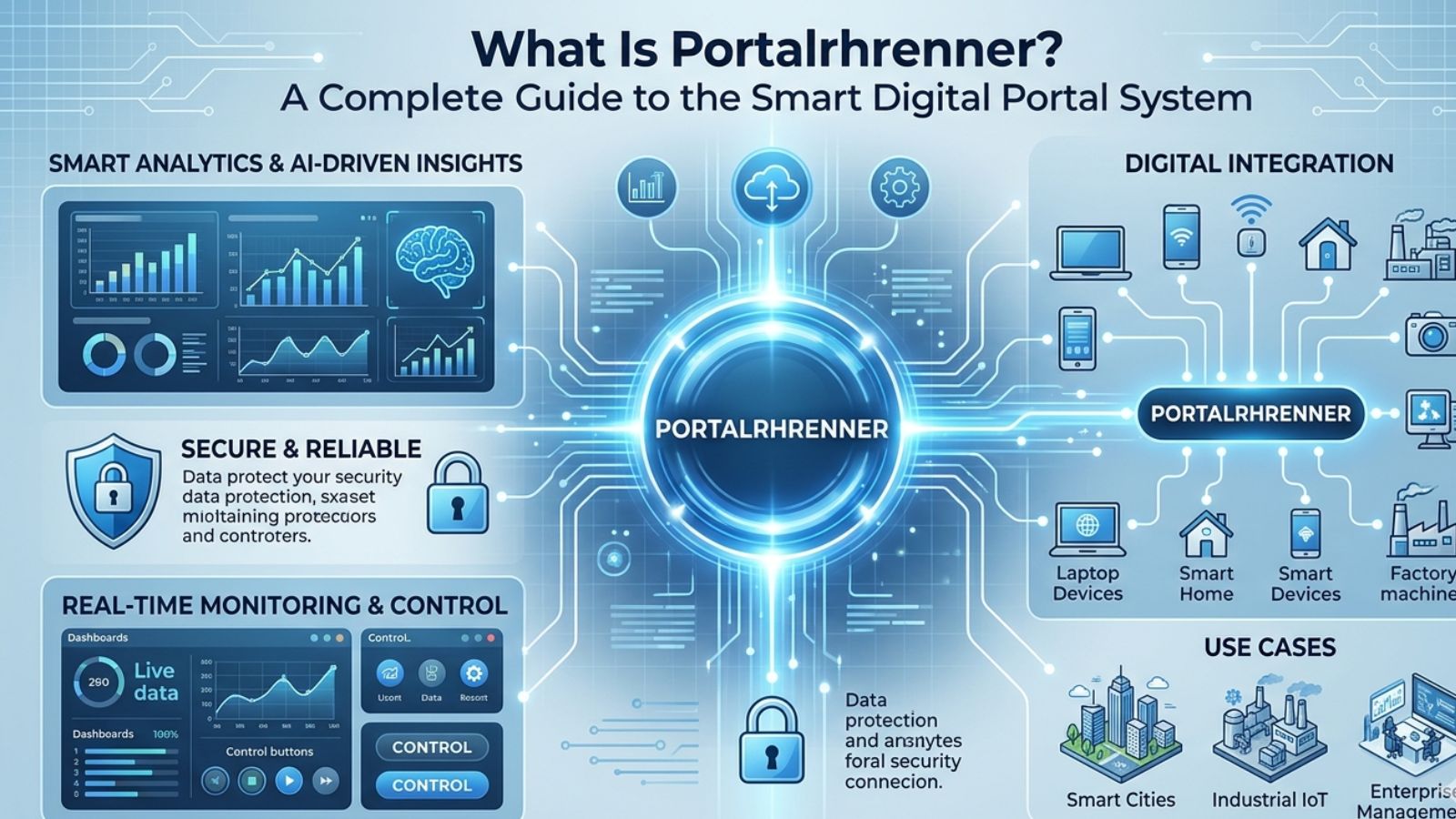
In today’s rapidly evolving digital landscape, businesses and organizations rely on multiple software tools, platforms, and systems to manage their operations. While these technologies improve productivity, they can also create complexity when users must constantly switch between applications to complete tasks. This challenge has led to the emergence of innovative solutions designed to centralize access and streamline workflows.
One concept gaining attention is Portalrhrenner, a smart digital portal system that integrates multiple services, tools, and processes into a single, unified platform. By acting as both an access point and an active management system, Portalrhrenner helps organizations improve efficiency, reduce operational friction, and create a more connected digital environment.
In this complete guide, we’ll explore what Portalrhrenner is, how it works, its key features, benefits, potential applications, and why it may represent the future of digital workflow management.
Understanding Portalrhrenner
At its core, Portalrhrenner is a centralized digital portal system designed to connect various services, databases, applications, and workflows through a single interface.
Also Read: LaChantyMVN Explained: The Story Behind the Viral Creator
Unlike traditional portals that primarily serve as entry points to information, Portalrhrenner functions as an intelligent gateway capable of managing interactions between different digital systems.
In simple terms, Portalrhrenner allows users to access multiple tools and services without repeatedly logging into separate applications. The platform creates a seamless experience where information flows efficiently across connected systems.
This integrated approach helps organizations save time, improve collaboration, and reduce the complexity often associated with managing multiple digital platforms.
What Makes Portalrhrenner Different?
Many organizations already use online portals, dashboards, and management platforms. However, Portalrhrenner differs in several important ways.
Traditional Digital Portals
Traditional portals often provide:
- Access to documents
- User authentication
- Basic navigation links
- Static information
While useful, these portals frequently require users to leave the platform to complete tasks in other systems.
Portalrhrenner
Portalrhrenner goes beyond simple access by offering:
- <!– 0b543691b6406566030c8f6255c63d1c –>
- Real-time data integration
- Cross-platform communication
- Centralized management
- Dynamic information processing
Instead of acting as a passive gateway, it actively coordinates interactions between connected systems.
Key Features of Portalrhrenner
The effectiveness of Portalrhrenner comes from its ability to combine multiple capabilities into one unified solution.
1. Centralized Access
One of the most significant benefits is centralized access.
Users can connect to:
- Business applications
- Communication tools
- Databases
- Cloud services
- Internal systems
through a single interface.
This eliminates the need to constantly switch between platforms.
2. Workflow Management
Portalrhrenner supports automated workflow management.
Tasks can move automatically between departments, systems, or approval stages without requiring manual intervention.
Benefits include:
- Faster processing
- Reduced errors
- Improved consistency
- Better productivity
3. Data Integration
Modern organizations often store data across multiple systems.
Portalrhrenner can bring information together from:
- CRM platforms
- ERP systems
- Customer databases
- Analytics tools
- Cloud applications
This creates a unified view of organizational data.
4. User-Friendly Interface
Complex systems often suffer from poor usability.
Portalrhrenner focuses on providing:
- Intuitive navigation
- Simplified dashboards
- Personalized user experiences
- Easy access to critical information
A better interface encourages adoption and improves overall efficiency.
5. Real-Time Communication
Many digital processes require instant information sharing.
Portalrhrenner enables:
- Live updates
- Notifications
- Status tracking
- Team collaboration
This helps users stay informed and respond quickly to changes.
How Portalrhrenner Works
The system operates by connecting multiple digital components into a centralized framework.
Step 1: Integration
Applications and services are connected to the portal.
Examples include:
- HR systems
- Finance software
- Customer support tools
- Project management platforms
Step 2: Data Synchronization
Portalrhrenner continuously synchronizes information across connected systems.
This ensures that users always access current and accurate data.
Step 3: Workflow Coordination
Tasks and processes are automatically routed through predefined workflows.
For example:
- Employee requests
- Customer inquiries
- Purchase approvals
- Project updates
can move through the system efficiently.
Step 4: User Interaction
Users access everything through a centralized dashboard that simplifies navigation and task management.
Benefits of Using Portalrhrenner
Organizations implementing Portalrhrenner may experience numerous advantages.
Improved Productivity
Employees spend less time switching between applications and searching for information.
This allows them to focus on higher-value tasks.
Better Collaboration
Teams can work together more effectively when information is centralized and accessible.
Shared visibility reduces communication barriers.
Enhanced Efficiency
Automated workflows reduce repetitive manual processes.
Tasks are completed faster and with greater accuracy.
Reduced Complexity
Managing multiple systems can be overwhelming.
Portalrhrenner simplifies digital operations by providing a single point of access.
Stronger Decision-Making
Integrated data provides leaders with a clearer understanding of operations.
This supports more informed business decisions.
Industries That Can Benefit from Portalrhrenner
The flexibility of Portalrhrenner makes it suitable for various sectors.
Business Enterprises
Large organizations can centralize operations across departments.
Healthcare
Healthcare providers can connect patient records, scheduling systems, and communication tools.
Education
Schools and universities can manage learning resources, student records, and administrative functions from one platform.
Government Agencies
Public institutions can improve service delivery through integrated digital portals.
Financial Services
Banks and financial organizations can streamline workflows and improve customer interactions.
The Role of Automation in Portalrhrenner
Automation is one of the most valuable aspects of modern digital systems.
Portalrhrenner supports automation by:
- Routing tasks automatically
- Triggering notifications
- Updating records
- Generating reports
- Monitoring workflows
This reduces human error while increasing operational speed.
As organizations continue embracing digital transformation, automation will become even more important.
Security Considerations
Any system managing large amounts of data must prioritize security.
Portalrhrenner can support various security measures, including:
User Authentication
Ensuring only authorized users access sensitive information.
Access Controls
Limiting permissions based on roles and responsibilities.
Data Encryption
Protecting information during transmission and storage.
Activity Monitoring
Tracking user actions to identify potential security risks.
Strong security practices help maintain trust and compliance.
Why Portalrhrenner Represents the Future
Digital ecosystems are becoming increasingly complex.
Organizations now use dozens of tools to manage:
- Operations
- Communication
- Customer relationships
- Data analytics
- Financial activities
Without integration, these systems can create inefficiencies.
Portalrhrenner addresses this challenge by creating a connected environment where information and workflows move seamlessly between platforms.
As businesses continue pursuing digital transformation, solutions that simplify operations while improving efficiency will become increasingly valuable.
Portalrhrenner embodies many of the characteristics expected from next-generation digital infrastructure.
Potential Challenges
Despite its advantages, implementation may involve certain challenges.
Integration Complexity
Connecting multiple systems requires careful planning.
User Training
Employees may need training to fully utilize the platform.
Initial Costs
Advanced digital solutions often require investment in technology and implementation.
Ongoing Maintenance
Regular updates and monitoring help ensure optimal performance.
Organizations that address these challenges effectively are more likely to achieve long-term success.
Final Thoughts
Portalrhrenner represents a modern approach to digital management by combining access, automation, integration, and workflow coordination into a single intelligent platform.
Unlike traditional portals that merely provide entry points to information, Portalrhrenner actively connects systems, manages processes, and improves efficiency across digital environments.
As businesses, educational institutions, healthcare providers, and government agencies continue adopting digital technologies, integrated solutions like Portalrhrenner are becoming increasingly important.
By reducing complexity, improving collaboration, and streamlining workflows, Portalrhrenner has the potential to play a significant role in the future of digital transformation.
Frequently Asked Questions (FAQs)
1. What is Portalrhrenner?
Portalrhrenner is a smart digital portal system that integrates multiple services, tools, applications, and workflows into a centralized platform.
2. How does Portalrhrenner improve efficiency?
It reduces the need to switch between applications, automates workflows, centralizes data access, and improves collaboration across teams.
3. Is Portalrhrenner different from a traditional portal?
Yes. Traditional portals mainly provide access to information, while Portalrhrenner actively manages workflows, data integration, and system interactions.
4. Which industries can benefit from Portalrhrenner?
Industries such as healthcare, education, government, finance, and business enterprises can all benefit from its integrated capabilities.
5. Does Portalrhrenner support automation?
Yes. Automation is one of its key features, enabling task routing, notifications, workflow management, and real-time data processing.
